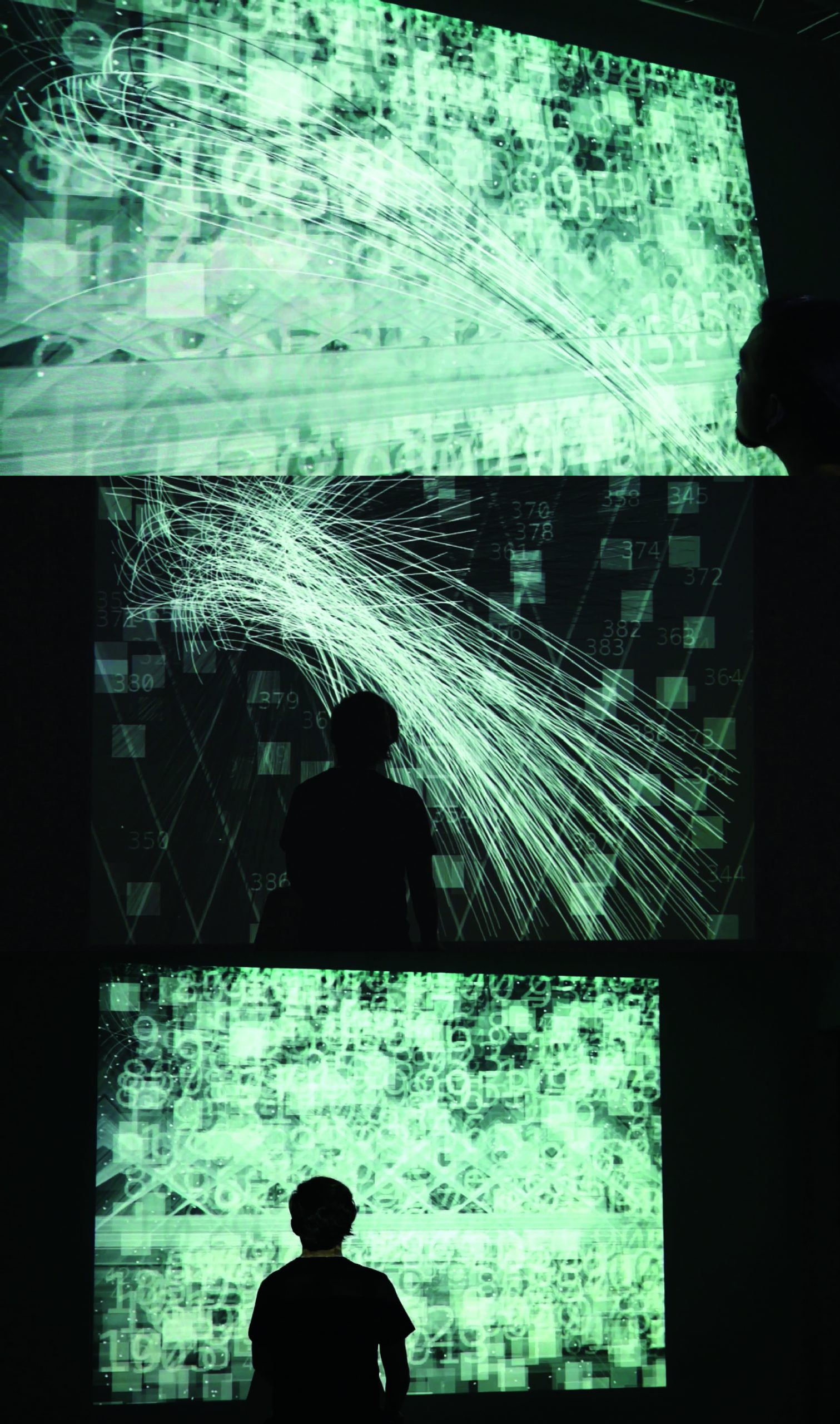
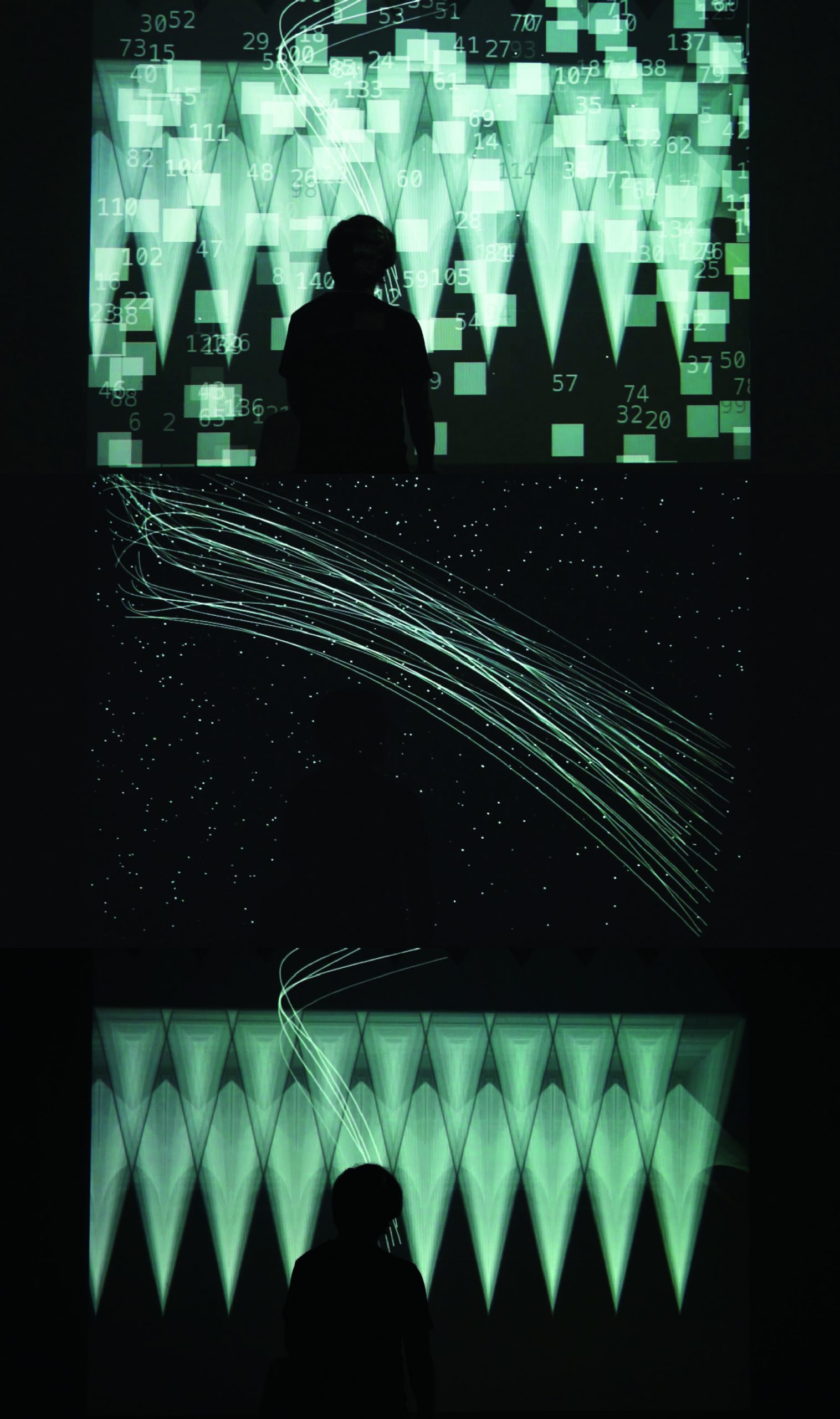
with in/visible hidden noise
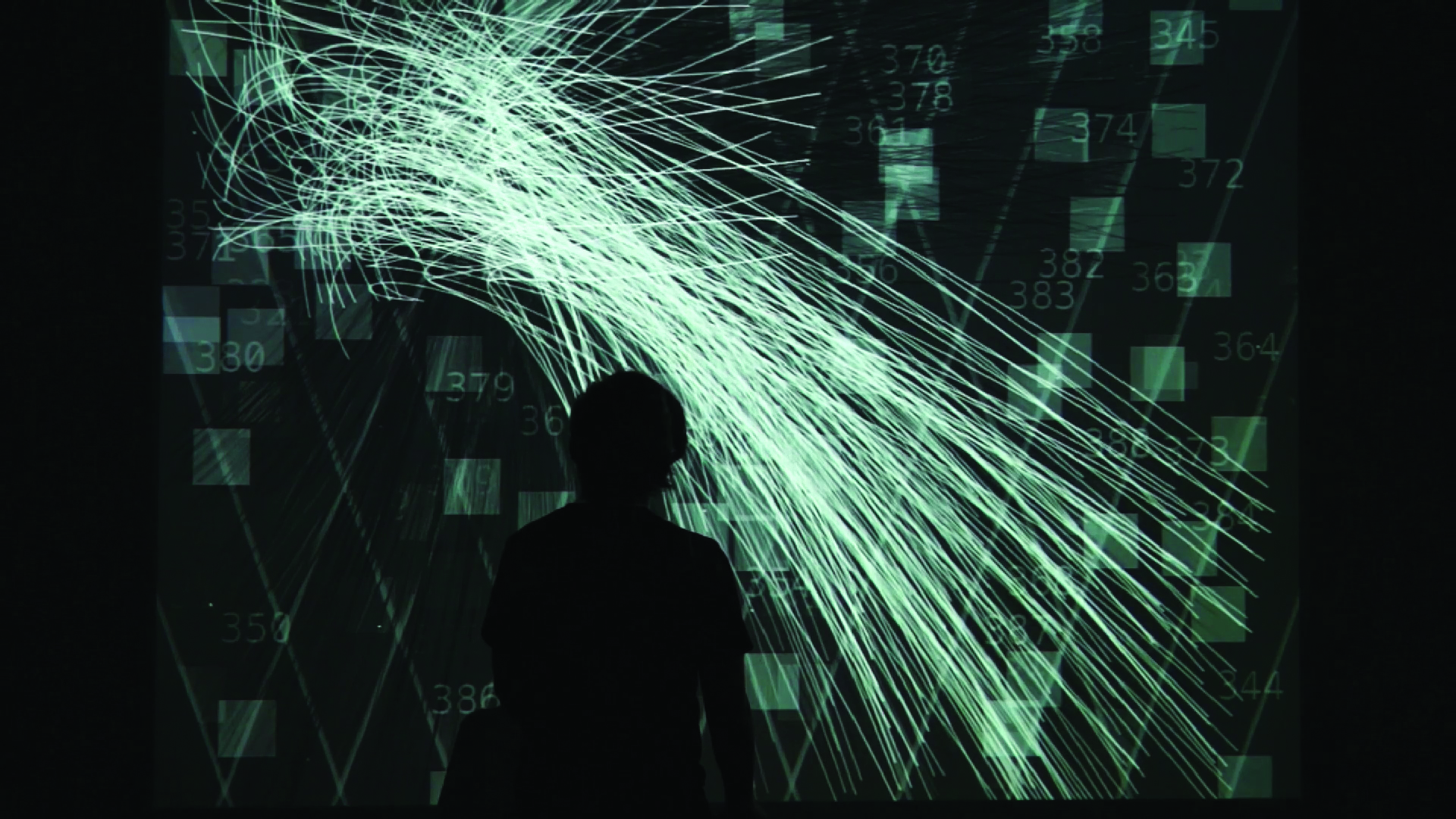
Multimedia interactive installation
In art and audiovisual communication, it seems that it is the gaze that controls the multiplicity of sensory relationships that constitute perceptual acts. This causes us to tend to give the utmost importance to one of the senses: sight. What about the other four?
In the present work I want to generate an experience that uses touch as an action producer, challenging the traditional conception according to which we are conditioned to see first and touch later. With it, I invite you to touch first and then later, and depending on how this tactile relationship is articulated, produce image and sound. The result is a subversive interface that reverses the traditional hierarchy of the senses.
Elements such as mystery, chance, intrigue and imagination are important in the work. Marcel Duchamp’s work “a bruit secret“ was one of the conceptual pillars (the name of my piece is a tribute to this piece), because it conjugated the uncertainty of the object, but at the same time it involved interaction with it. It consisted of two metal plates attached with screws that press a ball of rope with an unknown object inside. Visitors to the exhibition were suggested to interact with the sculpture to explore the sound produced by the bouncing of the unknown object inside.
The uncertainty of what lies inside (the invisible objects) is something extremely disturbing. To a certain extent, the object is not that important, since the sound itself sublimates that possible object … as Duchamp said, it could be a coin or a diamond … but in the end, they sound the same right?
Physical computing and creative programming languages allow us to make a quasi-digital interpretation of Duchamp’s sculpture, adding our own criteria, vision and personality (the chosen objects were found and acquired in a flea market, as ready mades).
Sound aesthetics are a tribute to the basic waves of oscillators: the square wave, sawtooth, sinusoidal and finally noise. These 4 waves serve as the basis in the creation of both analog and digital synthesizers. They are the basic elements of synthesis: raw, clean and simple sounds.